
Research
Research Environment
Faculty, researchers, graduate students and undergraduates work side by side. Two student rooms and a measurement room let us take a circuit from design through fabrication to evaluation without leaving the lab.
Student rooms built for focused work
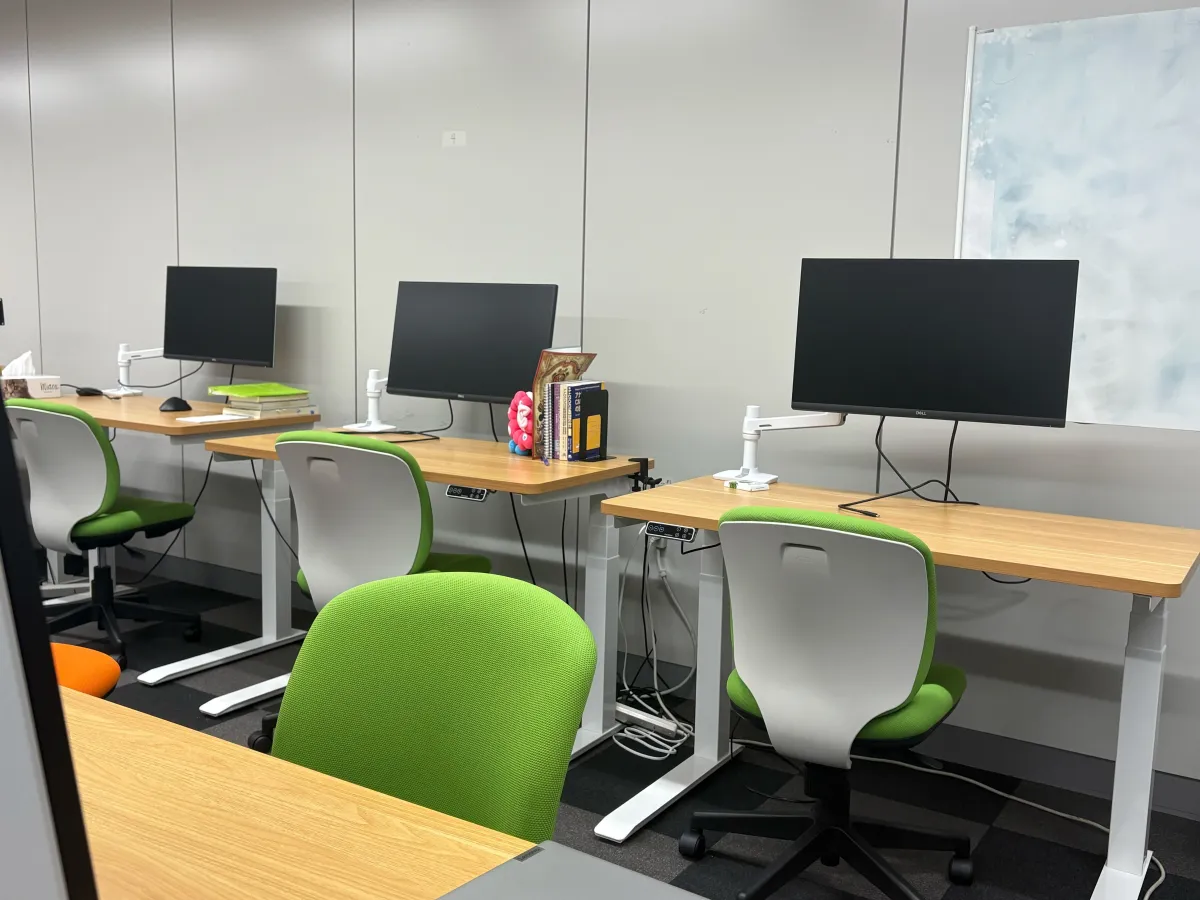
Room for solo work and for talking it through
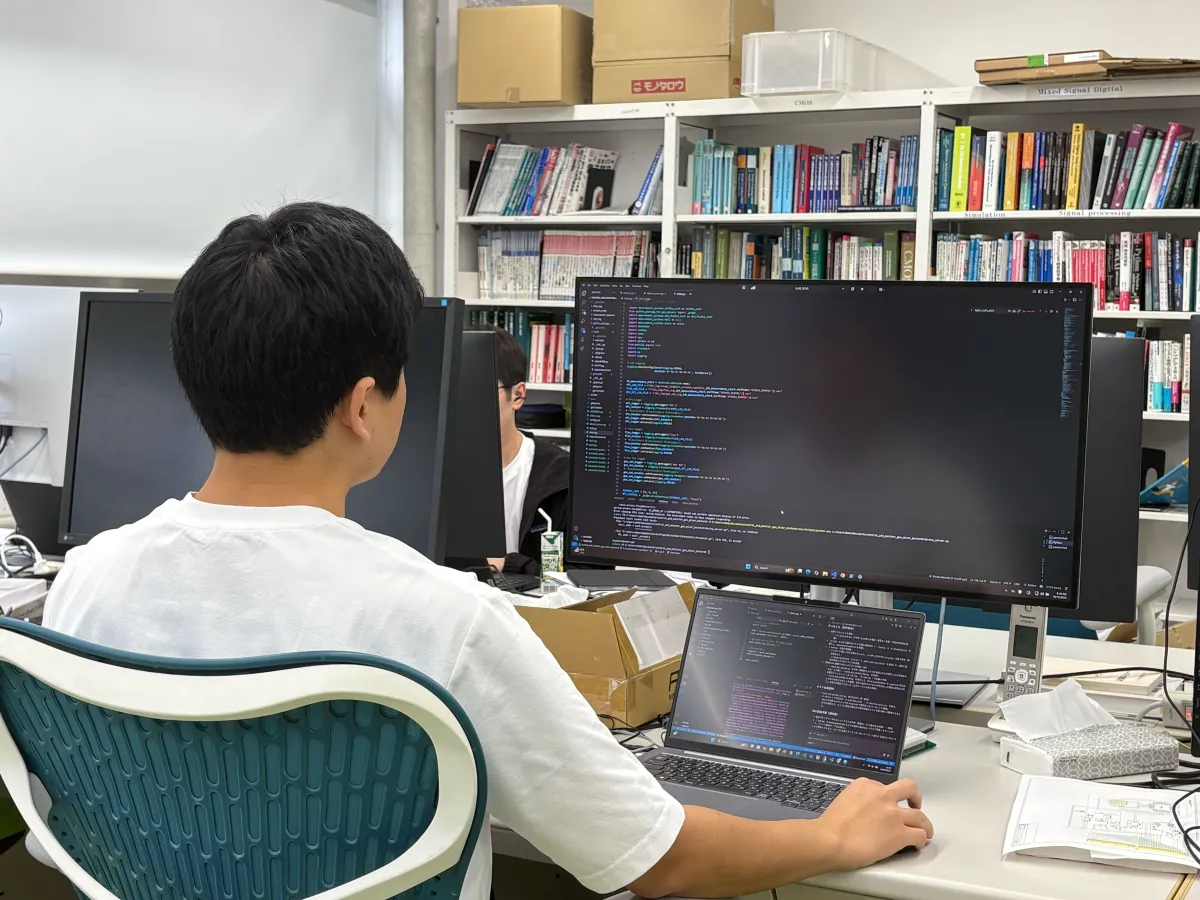
Two student rooms carry the day-to-day work: theory, programming and the small meetings that happen between them. Height-adjustable desks and large displays mean you can settle into your own work or turn around and argue about a circuit with the person behind you.
Explore the research workflow in illustrations

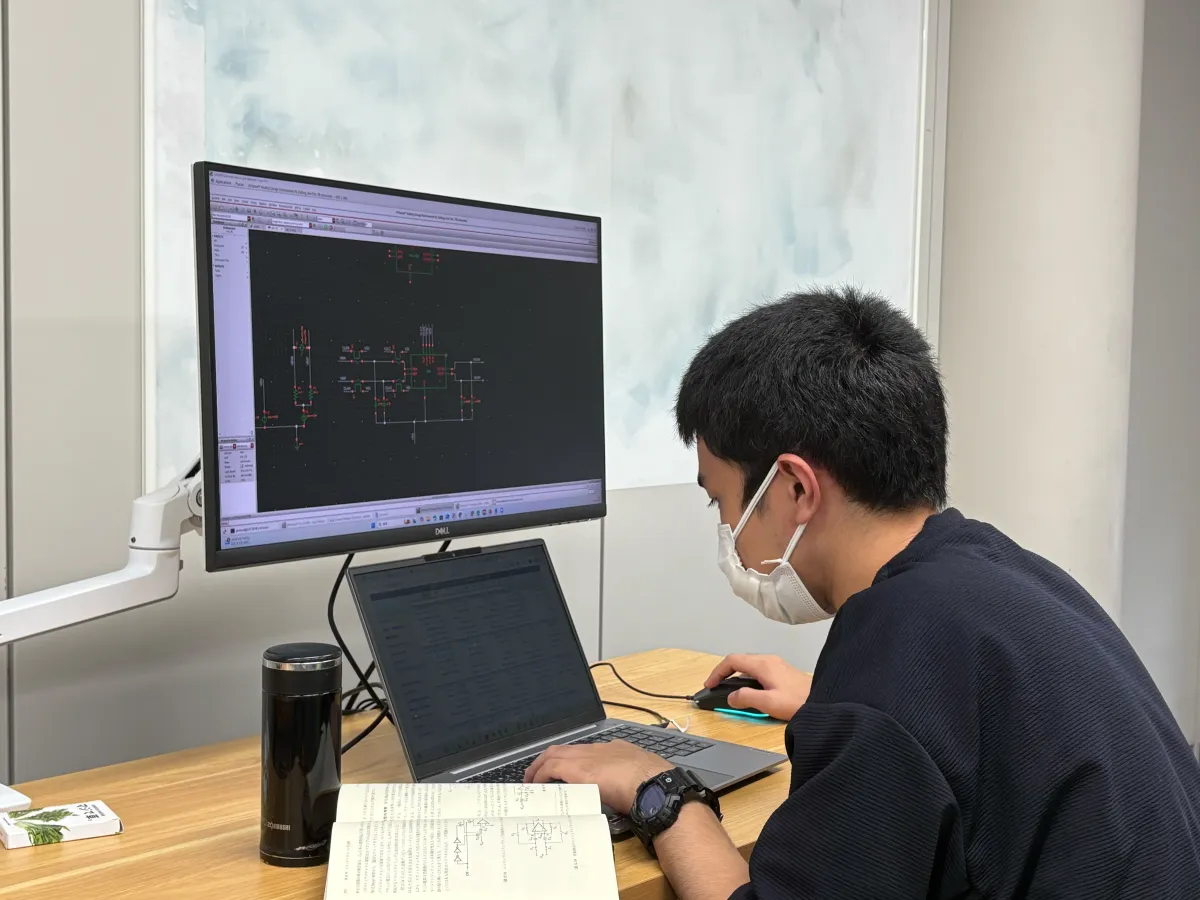
Chip circuit design and simulation

Layout design inside a chip
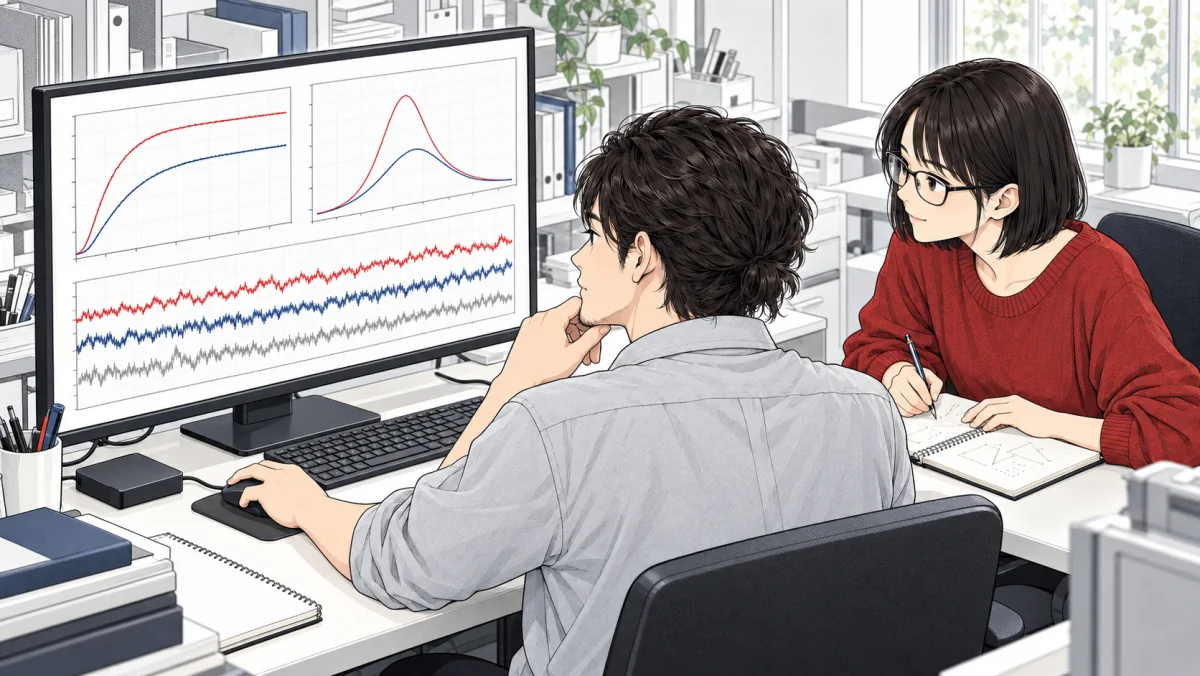
Analysing responses on a computer

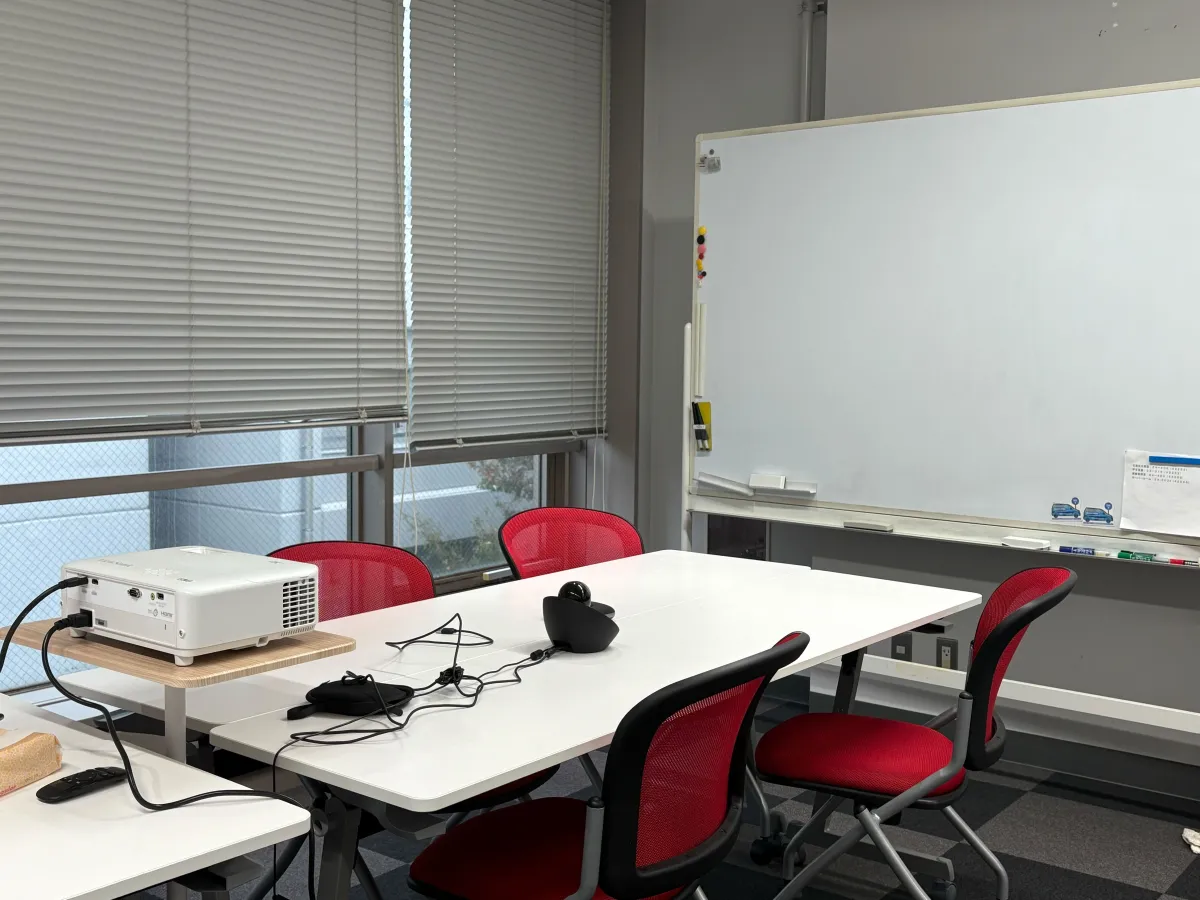
Discussing results and the next experiment
From schematic to measured silicon
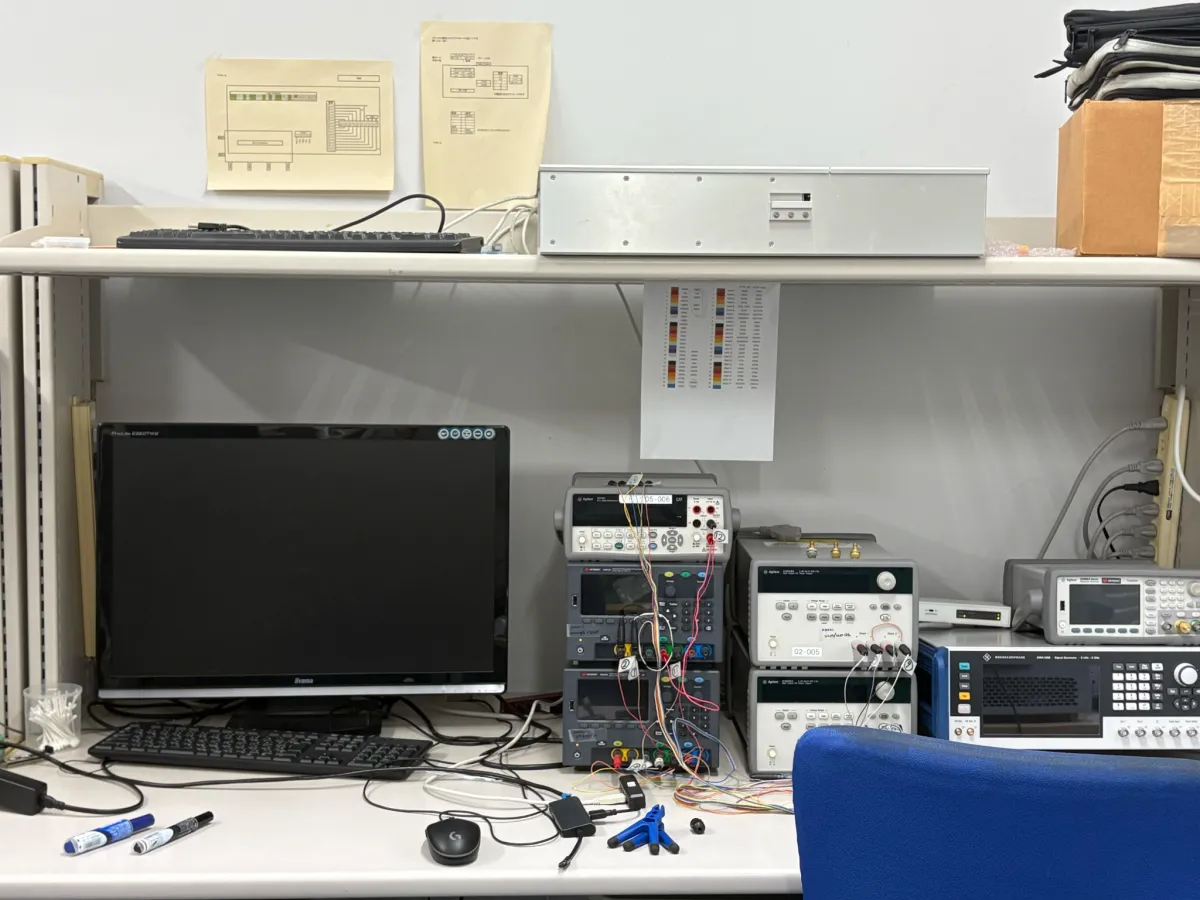
Build the circuit you designed, then measure it
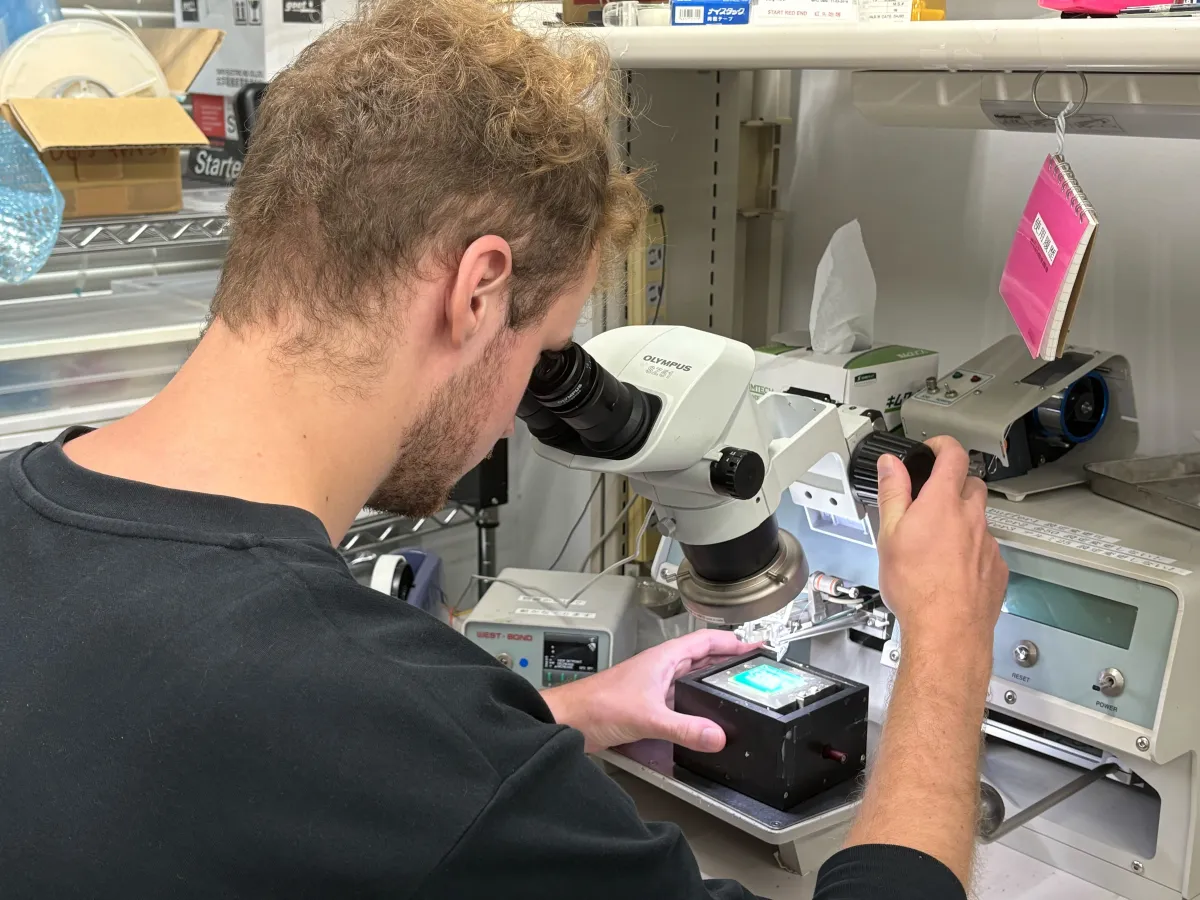
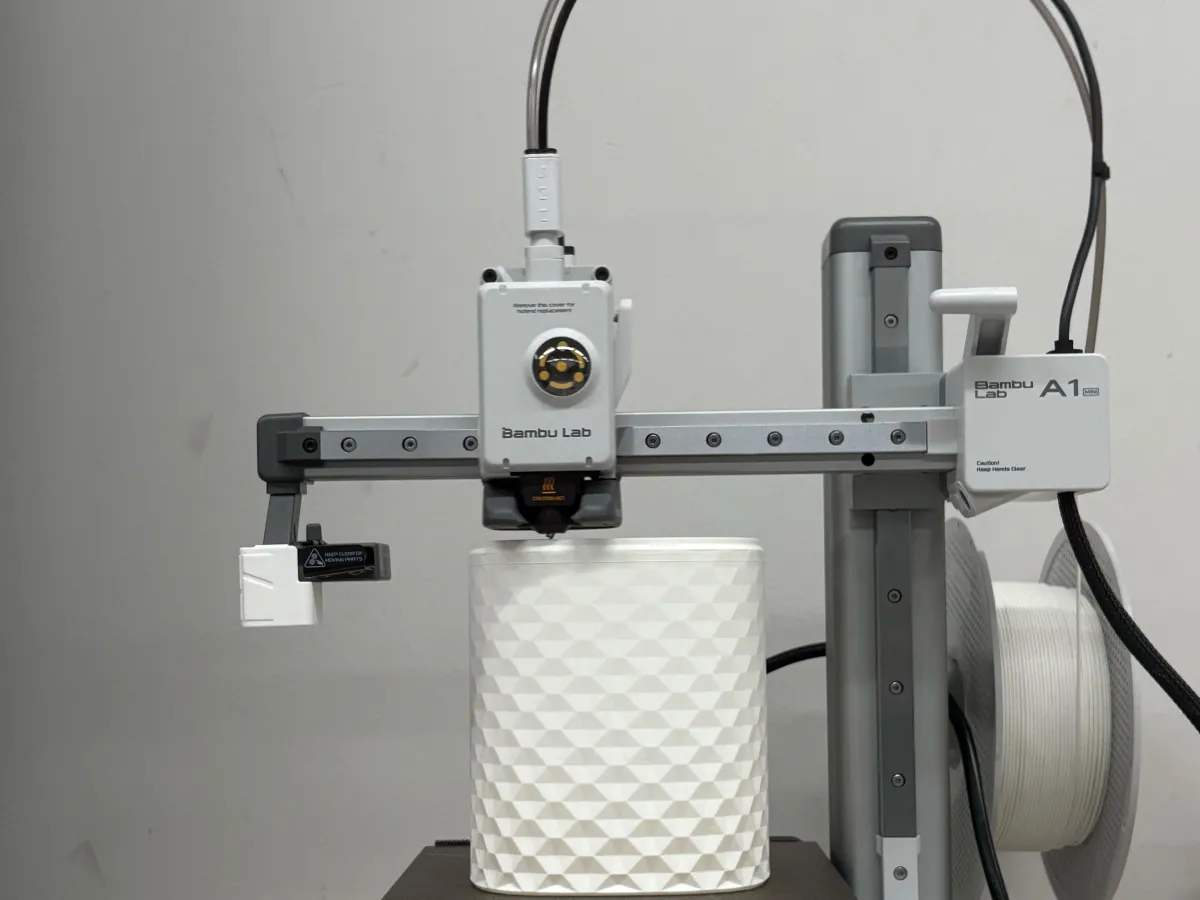
The measurement room is where integrated circuits are tested and characterised. A microscope-mounted wire bonder and a 3D printer are available alongside the instruments, so a design does not stop at simulation: you bond your own chip, build the jig for it, and measure what you actually made.
Explore the research workflow in illustrations
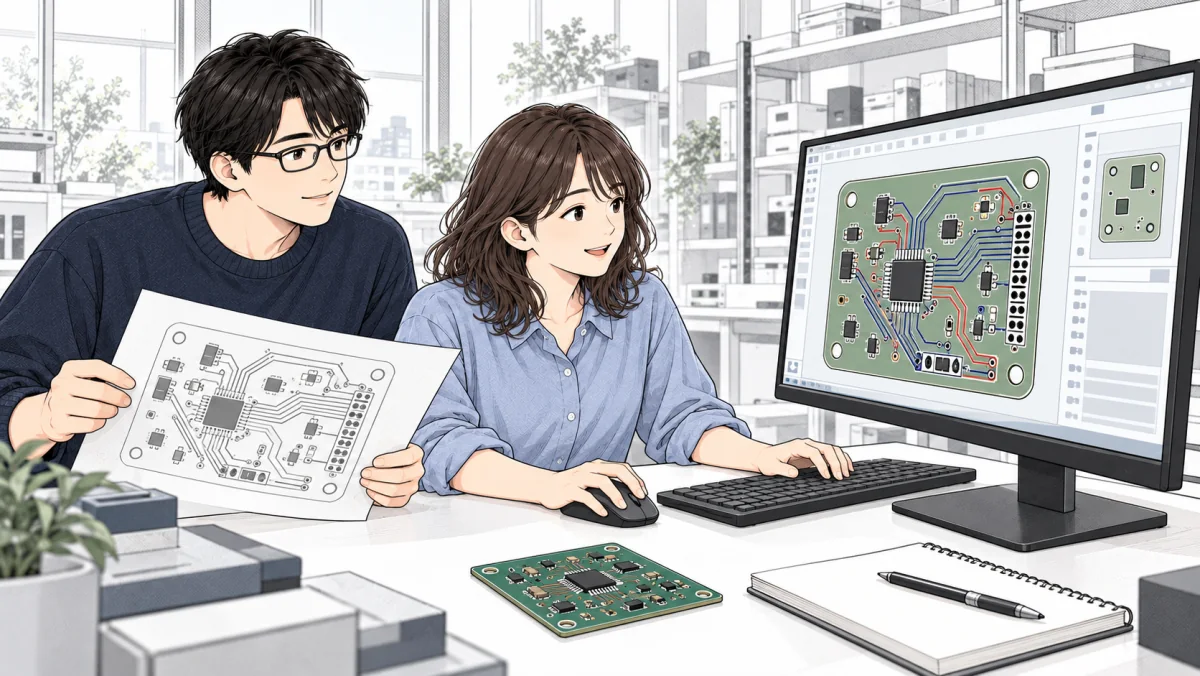
Designing a test PCB
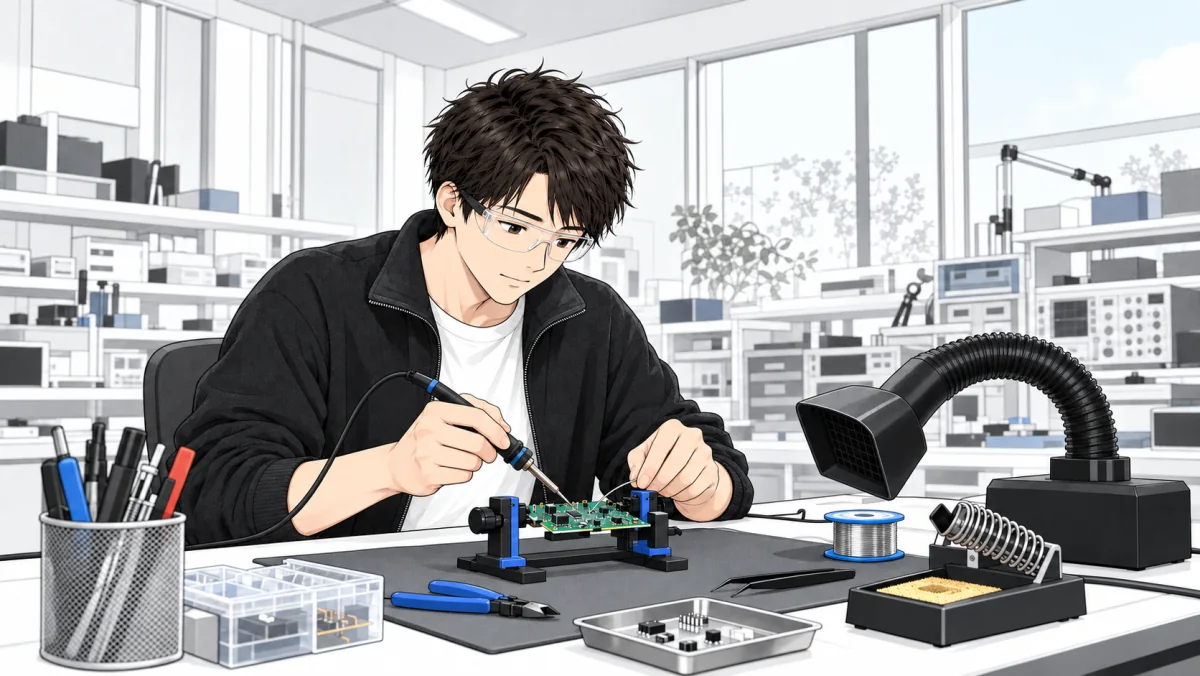
Assembling a board by soldering
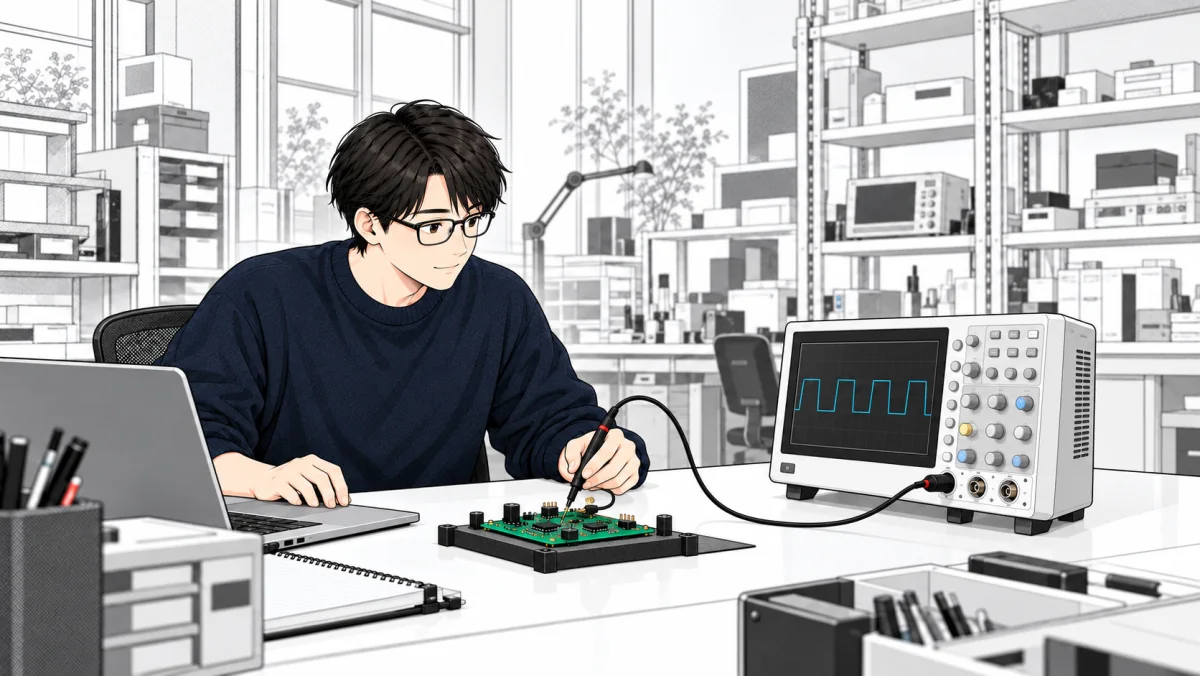
Checking signals with an oscilloscope
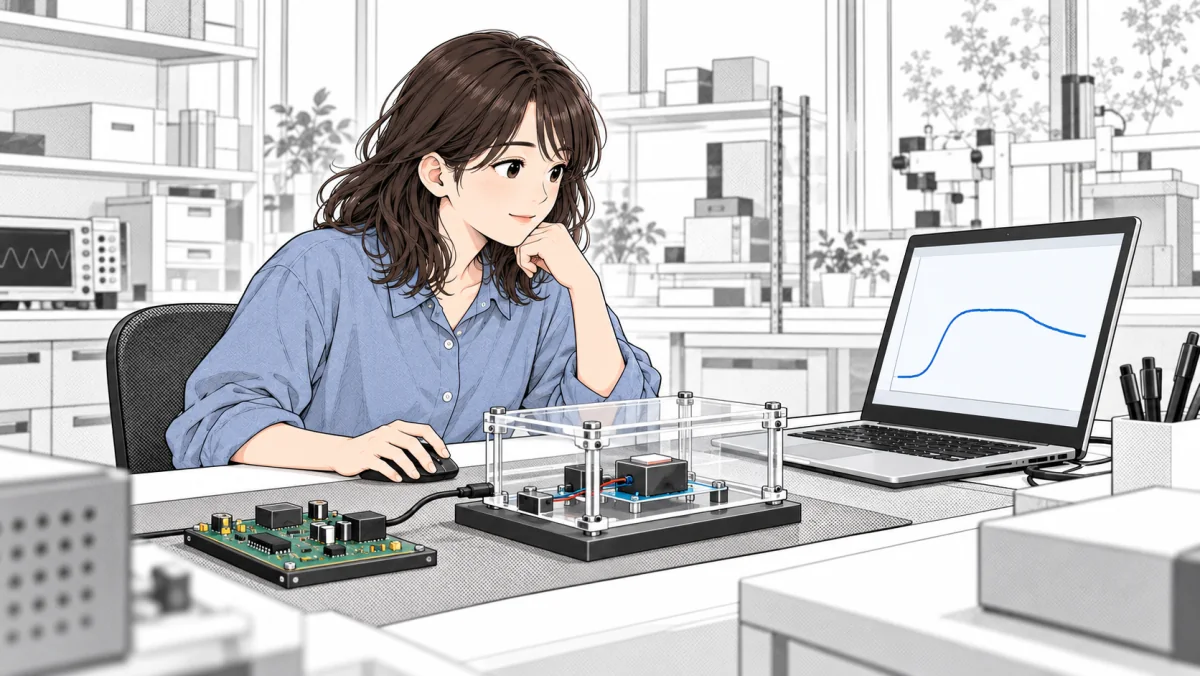
Observing a gas sensor response
Work that travels
Students go abroad; researchers come here
We work closely with research institutions abroad, sending our own students overseas and hosting students from partner institutions. There are opportunities to present at international conferences such as ISSCC and CICC.
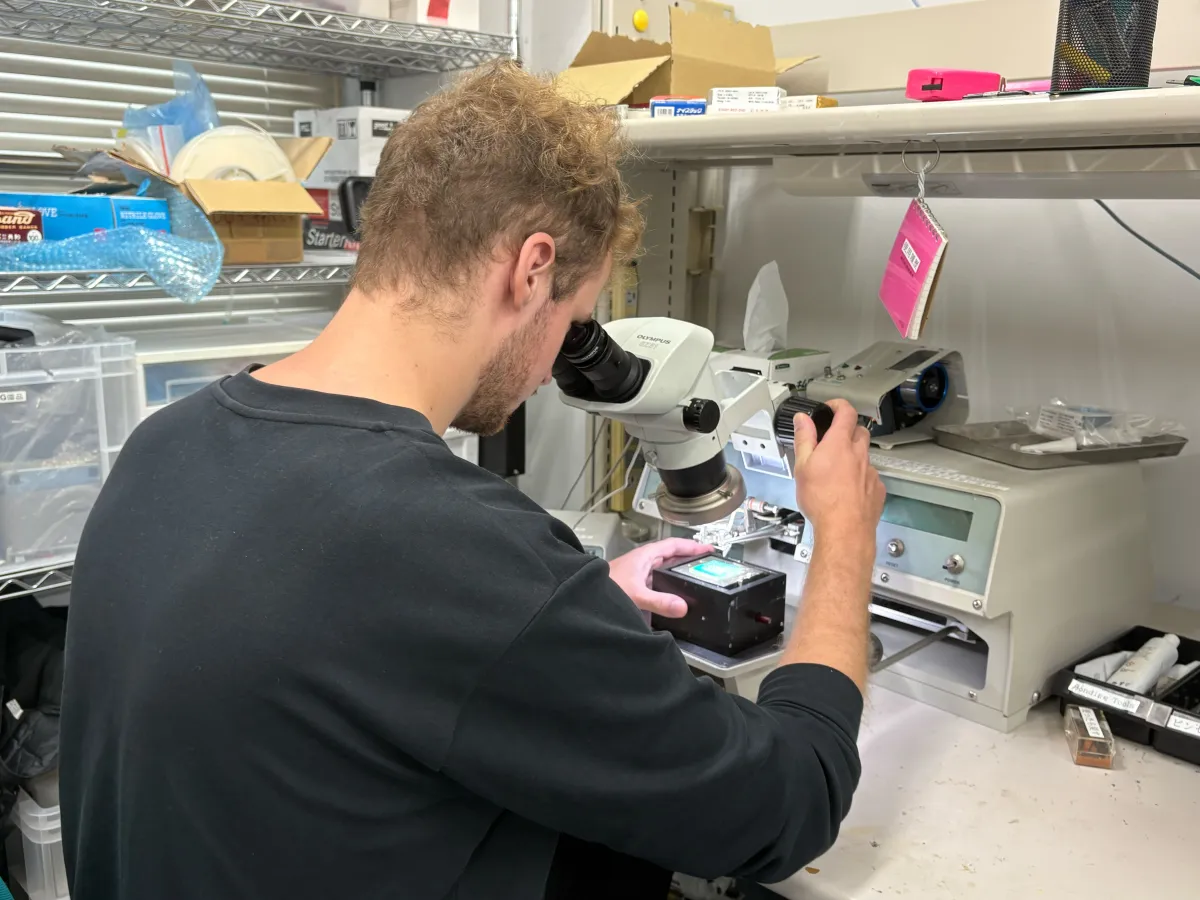
Explore the research workflow in illustrations
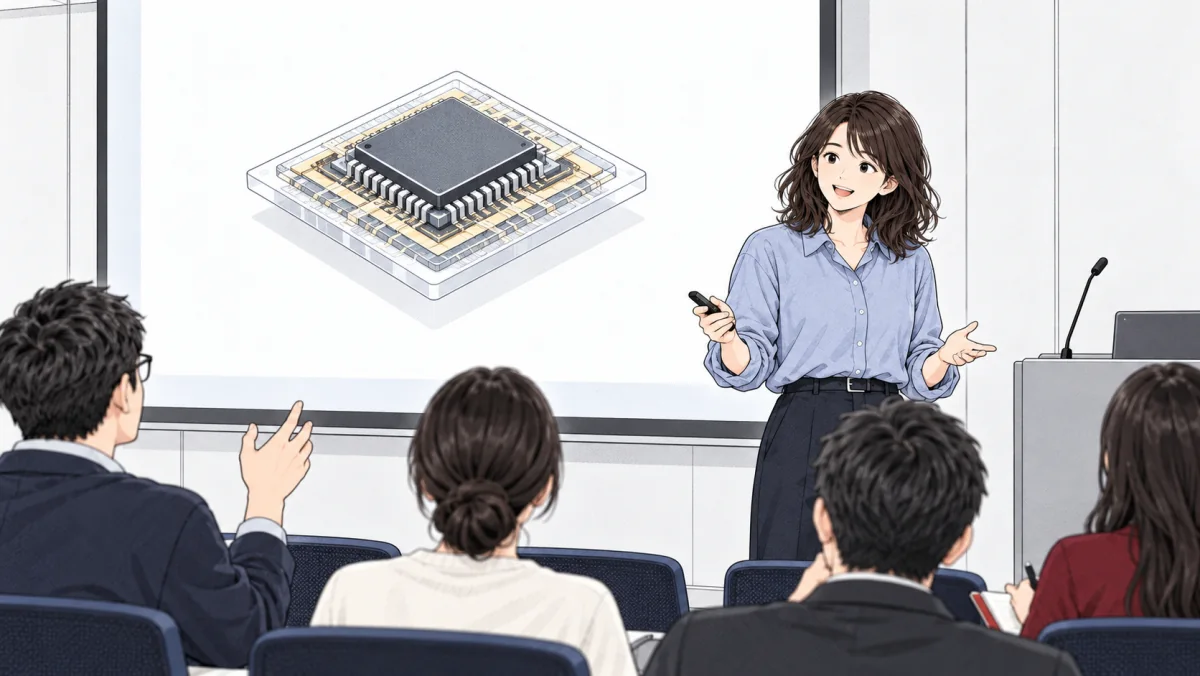
Presenting research and learning through questions
Facility plans for 2026
- New equipment for cryogenic and ultrasound measurement
- A cryogenic measurement room in Building 31, set up jointly with the Tada Laboratory (Dept. of System Design Engineering)